
Engineering
An AI code review agent that reads every pull request against your team’s actual conventions, flags what matters, and tells a human plainly what still needs their eyes.
What an AI code review agent does
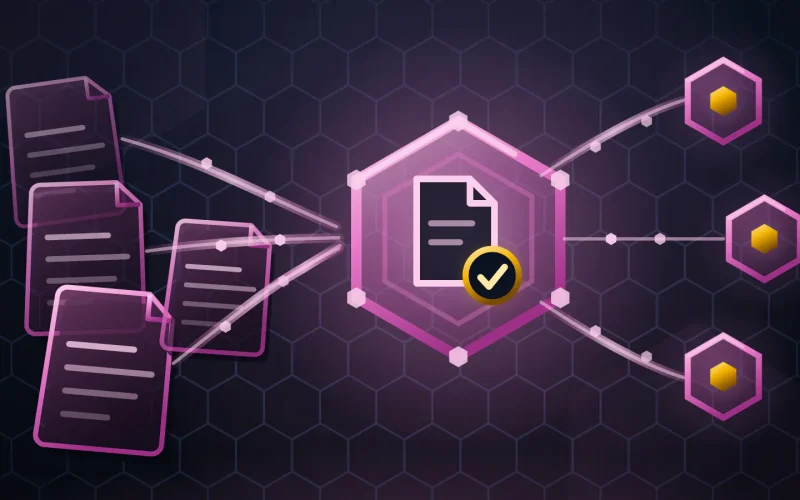
An AI code review agent is a scoped autonomous worker that reviews pull requests against your standards and reports findings the way a colleague would. It comments, ranks and suggests. It never merges.
The value is not that it reviews faster than a person. It is that it reviews every pull request at the same depth, at three in the afternoon and at midnight, including the ones that would otherwise be waved through because the reviewer was busy and the change looked small. Consistency is the thing humans cannot supply under load.
It is tuned against your conventions rather than generic advice, and the tuning is a deliverable. Encoding your review standards is often the first time some of them have been written down anywhere.
Inputs -> Outputs
| It reads | It produces |
|---|---|
| The diff and its full file context | Ranked inline comments, with the reasoning visible |
| Your encoded conventions and style rules | A plain statement of what a human still needs to read |
| The linked issue or ticket | A note where the change does not match its stated intent |
| Test results and coverage delta | A flag when a change lands untested |
| Dependency and import changes | A warning on anything new reaching the network or the filesystem |
| Review history and past overrides | A suppression list, so low-value comments stop appearing |
Where it runs
- Code repositories and pull requests
- CI/CD pipelines
- Issue trackers
- Chat, for review summaries
- Static analysis tooling
- Security advisory feeds
Platform names are shown as illustrative examples of a category, never a claim of a delivered integration.
A day in its life
| Time | What it does |
|---|---|
| 09:41 | A pull request opens. The agent picks up the diff, the linked issue and recent history on those files. |
| 09:42 | It reviews against your conventions and finds eleven candidate comments. |
| 09:43 | Seven are suppressed as low value based on what your reviewers have historically ignored. |
| 09:44 | Four are posted: a missing null check, an untested branch, a widened database permission, a naming inconsistency. |
| 09:45 | It flags the permission change as needing human security review and stops short of suggesting a fix. |
| 14:20 | A human merges. The agent records which comments were acted on, which tunes tomorrow’s suppression. |
Guardrails and human-in-the-loop
Autonomy boundary
It may read, comment, rank and propose a patch as a suggestion. It may not merge, push to a branch, approve its own suggestions or dismiss another reviewer’s comment.
Approval gates
Every change reaches production through your existing review policy. An agent comment is not an approval.
What stays human
Architecture, security-sensitive review, anything touching secrets or auth, and the merge itself.
Escalation
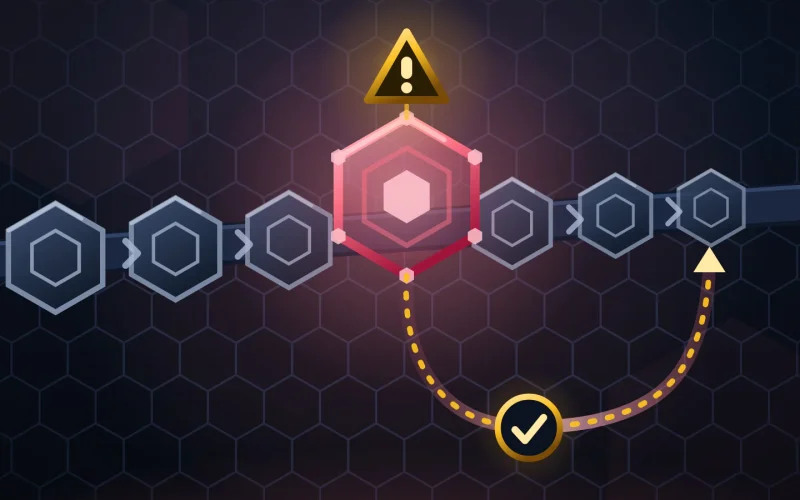
Security-relevant diffs are flagged for a named human reviewer rather than commented on, because a confident wrong opinion on auth code is worse than silence.
Logging
Every comment, suppression and suggestion is attributed and traceable to the diff that triggered it.
The human role it augments
This agent does not replace your senior engineer. It removes the first pass - the naming, the missing test, the obvious null check, the convention nobody wrote down - so that when they open the pull request they are spending their attention on design, security and whether this was the right change at all.
It also removes a queue. In most teams reviews bottleneck on one or two people, and the cost is not the review time but the waiting. Everything trivial being already handled is what shortens that wait.
Time to value and cost shape
- Cost shape - Priced per pull request rather than per engineer seat. Compare it to the loaded cost of the reviewer hours it returns, and to the delivery time lost while changes sit waiting.
- Model your own figures - ROI calculator · what a hive costs
KPIs it moves
- Review wait
- Time from pull request opened to first substantive review, before and after (Yours)
- Comment acted-on rate
- Share of agent comments a human acts on. A falling rate is a defect (Target)
- Coverage of PRs
- Share reviewed at full depth rather than waved through under load (Target)
- 100%
- Of comments attributed and traceable to the diff (Target)
Provenance is shown on every cell. Nothing here is a client outcome.
Frequently asked questions
Will it approve or merge pull requests?
No. It comments, ranks and suggests, and a human holds the merge. This is a design decision rather than a limitation we intend to remove: the value is in removing the waiting and the drudgery, not the judgment.
How do we stop it from producing review noise?
That is the main failure mode, so it is the main thing we tune. It starts in comment-only mode, is measured against what your reviewers actually flagged, and suppresses comment classes your team consistently ignores. The acted-on rate is tracked per agent, so noise shows up as a number before it shows up as irritation.
How does it know our conventions rather than generic best practice?
We encode them: style rules, review standards, architectural boundaries and the things your team has agreed never to do. That encoding is a deliverable, and it is tuned against real overrides in the first weeks. Off the shelf, it would give you the same advice as everyone else, which is exactly what your reviewers ignore.
Can it review security-sensitive code?
It flags it and routes it to a named human rather than opining on it. Auth, secrets handling and permission changes are where a confident wrong review does the most damage, so the agent's job there is to make sure a person looks, not to substitute for one.
Related agents
Test-Writing Agent
Writes the tests this agent keeps asking for.
Incident Response Agent
Handles what reaches production anyway.
Self-Healing Infra Agent
Repairs the infrastructure underneath.
Dependency & Patch Agent
Reviews the upgrade pull requests it opens.
Build & Release Agent
Takes the change from merged to shipped.
Ad Ops Agent
A different department, same pattern: propose, never publish.