
Operations
An AI order tracking agent that watches every order from checkout to doorstep, works the exceptions inside your rules, and tells the customer a shipment is late before the customer tells you.
What an AI order tracking agent does
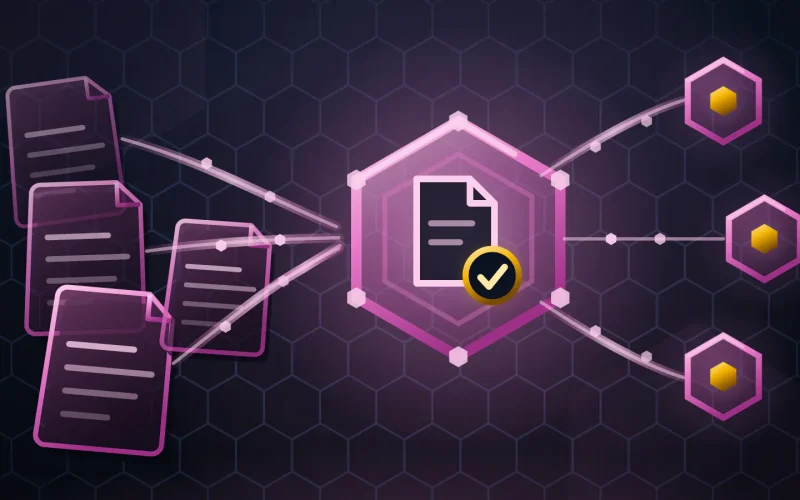
An AI order tracking agent is a scoped autonomous worker that follows each order through fulfillment, detects the ones going wrong, and either resolves them inside your policy or hands them over with the history attached.
Order operations is exception work. Most orders need nobody. The few that stall - a carrier scan that stops, a warehouse short-pick, an address that fails validation, a customs hold - need somebody to notice, and noticing is the part that does not scale. So it happens when the customer complains, which is the most expensive possible moment.
This agent watches continuously and works from the same signals your team does: carrier events, warehouse confirmations, promised dates and stock. When a shipment breaks its promise, the customer hears it from you first.
Inputs -> Outputs
| It reads | It produces |
|---|---|
| Orders, line items and promised delivery dates | A tracked state per order, from payment to delivery |
| Carrier scans, exception codes and transit events | A stall flag when tracking stops moving against the plan |
| Warehouse and 3PL confirmations, picks and shorts | A rebooked or split shipment, inside the rules you set |
| Address validation and delivery constraints | A correction before dispatch instead of a failed delivery |
| Stock positions across locations | A reallocation to a location that can actually ship it |
| Your service promise and remedy policy | A proactive customer notice, and an escalation past policy |
Where it runs
- E-commerce and order management systems
- Warehouse and 3PL platforms
- Carrier and tracking APIs
- Inventory and stock systems
- Helpdesk, for proactive contact
- Chat, for exception queues
Platform names are shown as illustrative examples of a category, never a claim of a delivered integration.
A day in its life
| Time | What it does |
|---|---|
| 04:00 | Overnight carrier files land. It reconciles them against every order still in transit. |
| 04:06 | Nine shipments have not scanned in 48 hours. Six are a known weekend depot pattern. |
| 04:07 | Three are genuinely stuck. It opens carrier traces on all three and records the reference. |
| 04:12 | One order will miss a next-day promise. It emails the customer with the new date and the remedy. |
| 04:30 | A short-pick leaves an order incomplete. It splits the shipment and releases the available lines. |
| 07:30 | Operations opens three carrier cases already raised, not a morning of customer complaints. |
Guardrails and human-in-the-loop
Autonomy boundary
It may track, reconcile, split shipments, reallocate stock, raise carrier traces and send delivery notices. It may not refund, cancel an order, issue a credit or change a price.
Approval gates
Any remedy with a cost - expedited reship, goodwill credit, courier upgrade - needs a person unless it sits inside a limit you have set in writing.
What stays human
Commercial exceptions, high-value orders, anything involving a damaged or dangerous consignment, and any customer already in a complaint.
Escalation
A missed service promise, a carrier that will not trace, a customs hold, or an order that has been stuck through two remediation attempts.
Logging
Every order carries a full event trail: what was seen, what was inferred, what was done and what the customer was told, with timestamps.
The human role it augments
This agent does not replace your operations or fulfillment team. It removes the watching - the tracking-page refreshes, the morning carrier spreadsheet, the manual check on every order that looked odd - so the team works the exceptions that need a decision instead of hunting for them.
It also moves who starts the conversation. Most delivery contacts today are a customer asking where something is. When the notice goes out first, the same event costs one email instead of a ticket, a reply and a refund argument. The agent cannot make a late parcel early, and it does not pretend to.
Time to value and cost shape
- Cost shape - Priced per order tracked and per exception worked, not per operations seat. The comparison is a few API calls against a loaded operations hour, plus the support contacts a proactive notice removes entirely.
- Model your own figures - ROI calculator · what a hive costs
KPIs it moves
- Time to detect
- Hours from a shipment stalling to somebody knowing, before and after (Yours)
- Where-is-my-order tickets
- Delivery contacts per hundred orders, tracked monthly (Yours)
- Exceptions auto-resolved
- Share closed inside policy without a person, reviewed weekly (Yours)
- 100%
- Of orders carrying a complete, timestamped event trail (Target)
Provenance is shown on every cell. Nothing here is a client outcome.
Frequently asked questions
Can it talk to our customers directly?
It sends delivery notices in your templates, on the events you approve, through your own support system so the thread stays in one place. Replies go to a person. A proactive update is a different act from a conversation, and the agent only does the first one.
What if a carrier's tracking data is wrong or missing?
It treats silence as a signal rather than as good news, which is the opposite of most tracking pages. An order with no scan for longer than its normal pattern is flagged even when nothing has been reported wrong. Where a carrier's data is unreliable, the pattern shows up in the exception report.
Will an AI order tracking agent work with our 3PL and our own warehouse?
It works across whatever systems hold the order state, and the common case is several: a store, a warehouse system, a 3PL portal and two carriers. Where a system has an API, the agent uses it. Where it does not, we build the bridge, and that is usually the longest part of setup.
Can it issue refunds when a delivery fails?
Not on its own. It can propose the remedy your policy specifies and prepare it for approval, and it can act alone only inside a value limit you set. Money moving without a human decision is a boundary we start closed and recommend leaving there.
Related agents
Invoice Matching Agent
Handles the finance side of the same purchase orders and goods receipts.
Compliance Watch Agent
Evidences that these exception rules were followed as written.
Onboarding Agent
Runs the same exception-and-approval pattern on people instead of parcels.
Ticket Triage Agent
Sorts the delivery tickets this agent’s notices are designed to prevent.
Knowledge-Base Agent
Documents the delivery questions that keep coming back.
Test-Writing Agent
A different department, same instinct: cover the edge case before a customer finds it.
Part of AI business process automation