
Customer Support
An AI knowledge base agent that turns the questions your team answered this week into drafted articles, finds the ones that have gone out of date, and never publishes a word without an owner approving it.
What an AI knowledge base agent does
An AI knowledge base agent is a scoped autonomous worker that keeps a help center current: drafting articles from resolved tickets, flagging what has gone stale, and routing every draft to a human owner.
Documentation loses to the queue every time, and it should. A ticket has a customer waiting. An article has nobody. So the same answer gets typed into ticket after ticket and never into the help center, and the deflection that would pay for the whole team never arrives.
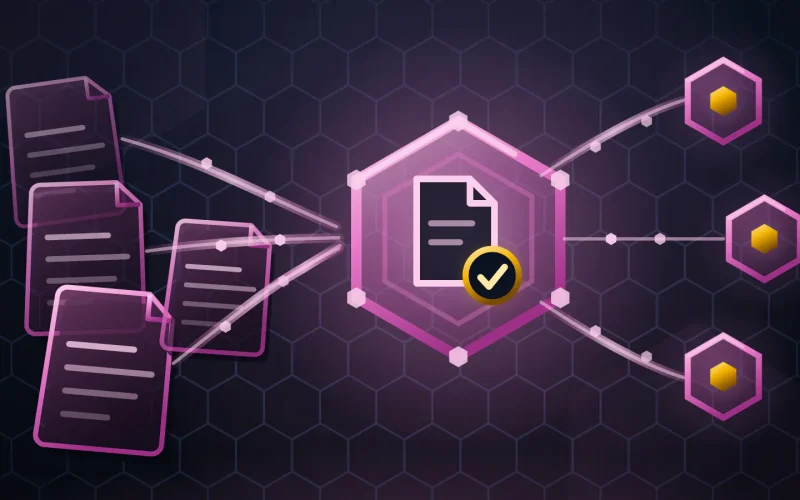
The agent works from what your team already wrote. It reads resolved tickets, spots the question asked repeatedly, drafts the article in your format, and marks the claims it could not confirm. Product changes and release notes tell it which existing articles just became wrong.
Inputs -> Outputs
| It reads | It produces |
|---|---|
| Resolved tickets and their real replies | A drafted article for a question that keeps recurring |
| Search terms with no matching article | A gap list, ordered by how often the gap is hit |
| Release notes, changelogs and product updates | A list of articles the change just made wrong |
| Article age, traffic and helpfulness signals | A retirement or refresh proposal, with the evidence |
| Your style guide, structure and reading level | Drafts in your format, not the model’s default shape |
| Policy, legal and pricing pages | A stop, whenever a draft would state a policy or a commitment |
Where it runs
- Knowledge bases and help centers
- Helpdesk and ticketing systems
- Internal wikis and documentation stores
- Version control, for docs kept as code
- Site search and analytics
- Chat, for review handoffs
Platform names are shown as illustrative examples of a category, never a claim of a delivered integration.
A day in its life
| Time | What it does |
|---|---|
| 06:00 | The weekly run reads last week’s resolved tickets and the help center’s failed searches. |
| 06:14 | One question was answered 23 times by four different people, four slightly different ways. |
| 06:21 | It drafts one article from the clearest of those replies and cites the tickets behind it. |
| 06:35 | A release note changes an export limit. Six live articles still state the old number. |
| 06:36 | It proposes the edit to all six and holds them together, so the help center never disagrees with itself. |
| 06:48 | One draft would state a refund rule. It stops and asks the policy owner instead. |
Guardrails and human-in-the-loop
Autonomy boundary
It may read, draft, propose edits and flag stale content. It may not publish, unpublish, or edit a live article.
Approval gates
Every article has a named owner who approves it. Publishing is a human action, and we do not recommend moving that boundary.
What stays human
Anything that states a policy, a price, an entitlement, a security claim or a legal position. The agent drafts around those and asks.
Escalation
A draft that would commit the company, a product behavior it cannot confirm from a source, or two sources that contradict each other.
Logging
Every draft records the tickets and documents it drew on, the article versions it read, and the person who approved it.
The human role it augments
This agent does not replace your support leads or your technical writers. It removes the blank page and the audit - the two jobs that always slip - so the people who understand the product spend their time on accuracy and structure rather than on finding out what needs writing.
The stale-content half matters more than the drafting half, and gets less attention. A help center full of confidently wrong articles is worse than a small one, because customers act on it and then write in angrier than if they had found nothing.
Time to value and cost shape
- Cost shape - Priced per draft and per audit cycle, not per seat. The comparison is writer hours against the same answer being typed into ticket after ticket, and against the tickets a working article would have prevented.
- Model your own figures - ROI calculator · what a hive costs
KPIs it moves
- Coverage
- Recurring questions with a current published article, before and after (Yours)
- Article age
- Share of live articles reviewed within your own review window (Yours)
- Search success
- Help center searches ending in an article rather than a ticket (Yours)
- 100%
- Of published articles approved by a named owner (Target)
Provenance is shown on every cell. Nothing here is a client outcome.
Frequently asked questions
Will it publish something wrong to our help center?
It cannot publish at all. It drafts and proposes; an owner reads and publishes. Where a claim cannot be traced to a ticket, a release note or existing documentation, it is flagged in the draft rather than smoothed over, which is what tells the reviewer where to look.
Does an AI knowledge base agent write in our voice?
It works from your existing articles and your style guide, so the drafts start in your register rather than a generic one. The first few weeks are calibration, and reviewer edits feed back into the configuration. Where your voice is inconsistent across a help center, the agent will surface that before it can match it.
What about customer data in the tickets it reads?
Personal data is removed before a draft is written, and articles are generalized from patterns rather than copied from a single conversation. Retention and access are scoped to the ticket fields the drafting actually needs, which is usually fewer than a helpdesk exposes by default.
Won't it flood us with drafts nobody has time to review?
It is rate-limited, and gaps are ordered by how often each one is hit rather than by how easy the article is to write. A review queue longer than a team can clear is a failed deployment, so the cadence is set with your owners and the agent holds to it.
Related agents
Order & Logistics Agent
Its exception patterns show which delivery questions need documenting.
Invoice Matching Agent
Generates the billing questions this agent turns into articles.
Compliance Watch Agent
Owns the policy statements this agent is forbidden to write.
Onboarding Agent
Uses the internal half of the same documentation on every new hire’s first day.
Ticket Triage Agent
Answers from these articles, and reports which ones are missing.
Code Review Agent
A different department, same principle: propose the change, let a named human accept it.
Part of AI customer support agents