
Sales
An AI meeting prep agent that reads tomorrow’s calendar overnight and files a one-page brief on every external meeting, including the open support ticket nobody mentioned.
What an AI meeting prep agent does
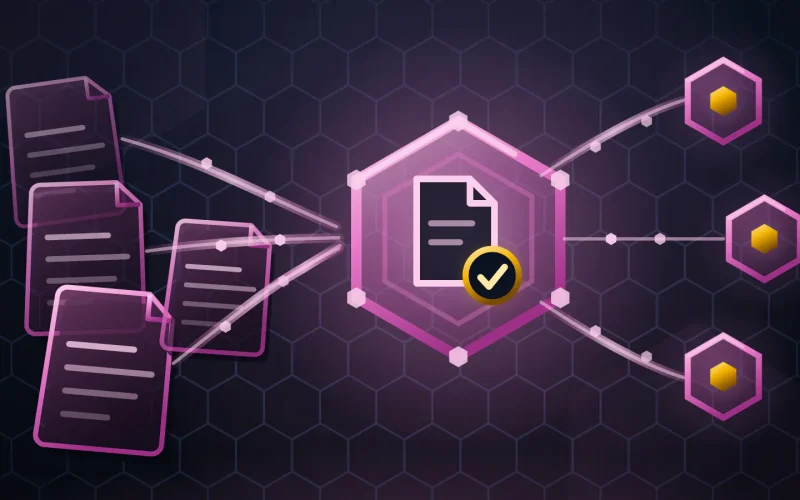
An AI meeting prep agent is a scoped autonomous worker that assembles what is already known about an account into a brief, before the meeting rather than during it. It reads. It does not act on the account.
Nobody skips preparation on purpose. It gets skipped because the material is scattered across the CRM, a thread, a shared drive, the helpdesk and somebody’s notes app, and the meeting starts in nine minutes. So the call opens with a question the account has already answered twice.
The brief arrives the night before, on one page, in the same shape every time: who is in the room, what happened last, what is open, what changed at their end, and the three questions worth asking. Anything it cannot verify is marked as unverified rather than stated.
Inputs -> Outputs
| It reads | It produces |
|---|---|
| Tomorrow’s calendar and its external attendees | A brief per meeting, filed the night before |
| CRM history, notes and the current opportunity | A short account state: stage, value, age, last contact |
| Email and meeting-notes threads with the account | What was actually promised, and by whom |
| Open tickets and recent escalations | A warning when the account is unhappy about something else |
| Public news, filings and personnel changes | What changed at their end since you last spoke |
| Your own call structure and qualification model | Three questions to ask, drawn from the gaps in the record |
Where it runs
- Calendars and scheduling tools
- CRM and opportunity records
- Email and meeting-notes stores
- Helpdesk and ticketing systems
- Document and knowledge stores
- Chat, for the morning delivery
Platform names are shown as illustrative examples of a category, never a claim of a delivered integration.
A day in its life
| Time | What it does |
|---|---|
| 21:00 | The nightly run reads tomorrow’s calendar and finds seven meetings with external attendees. |
| 21:04 | For each, it pulls the account record, the last two threads and the current opportunity. |
| 21:11 | On the 10:00 renewal call it finds a support ticket, opened Friday, still unanswered. |
| 21:12 | It puts that at the top of the brief, above the renewal number, and links the ticket. |
| 21:20 | It drafts three questions per meeting from what the record does not yet say. |
| 06:30 | Seven briefs are waiting. The renewal one has a line the rep would not have known. |
Guardrails and human-in-the-loop
Autonomy boundary
It may read, assemble and file a brief. It may not write to the CRM, contact the account, move a meeting or change an opportunity.
Approval gates
None are needed, because it produces a document and nothing else. That is the reason it is usually the first agent a sales team lets near their data.
What stays human
The meeting. The agent supplies context and questions; the rep decides what the conversation is for.
Escalation
An open escalation, a churn signal, or a promise in an old thread that was never kept. These are flagged at the top of the brief rather than buried in it.
Logging
Every brief records which records it read and when, so a rep can see whether a fact is current or three months old.
The human role it augments
This agent does not replace your account executives. It removes the scramble before the call - the search across five systems for something you half-remember - so the preparation that everyone agrees matters actually happens on the meetings that are not obviously important.
The pattern it changes is subtle. Reps already prepare properly for the big ones. What they cannot do is prepare for all 12 in a full week, so the small meetings run on memory and the surprises come from there.
Time to value and cost shape
- Cost shape - Priced per brief. The comparison is a few retrievals and a model call against the preparation time a rep either spends or skips, plus the meetings that end in “let me find out and come back to you”.
- Model your own figures - ROI calculator · what a hive costs
KPIs it moves
- Meetings briefed
- External meetings with a brief filed, against the total (Yours)
- Prep time
- Minutes a rep spends assembling context, before and after (Yours)
- Surprises caught
- Open issues surfaced before the call rather than in it (Yours)
- 100%
- Of brief facts traceable to a record with a date (Target)
Provenance is shown on every cell. Nothing here is a client outcome.
Frequently asked questions
Does it read our reps' email?
Only the threads with the account in the meeting, and only where you grant that access. Many teams start with CRM, calendar and helpdesk alone, and the briefs are still worth reading. Mailbox access is a separate decision, made once, and it can be scoped to shared inboxes rather than personal ones.
What if the CRM is out of date?
The brief will show that, which is uncomfortable and useful. Each fact carries its date, so a stage last touched in March is visibly stale rather than quietly wrong. Teams usually pair this agent with CRM cleanup for exactly that reason.
Is an AI meeting prep agent worth it for internal meetings too?
It runs on external meetings by default, because that is where missing context costs money. Internal briefing is possible and generally not worth the noise. The agent is deliberately narrow, and a brief filed for every recurring stand-up is how a useful document becomes one nobody opens.
How long is the brief?
One page, with the same five headings every time, and the exceptions at the top. Length is a design constraint rather than an accident: a brief a rep cannot finish in the lift is a brief that gets skipped, and a skipped brief is worth nothing.
Related agents
Proposal Drafting Agent
Turns what the meeting agreed into a scoped, priced document.
CRM Hygiene Agent
Fixes the stale records that make a brief read as out of date.
Pipeline Forecast Agent
Uses the same activity history to say which deals are real.
Lead Research & Enrichment Agent
Builds the account record this brief is drawn from.
Outbound Personalization Agent
Books the first of these meetings.
Order & Logistics Agent
A different department, same idea: surface the exception before somebody is embarrassed by it.