
Finance
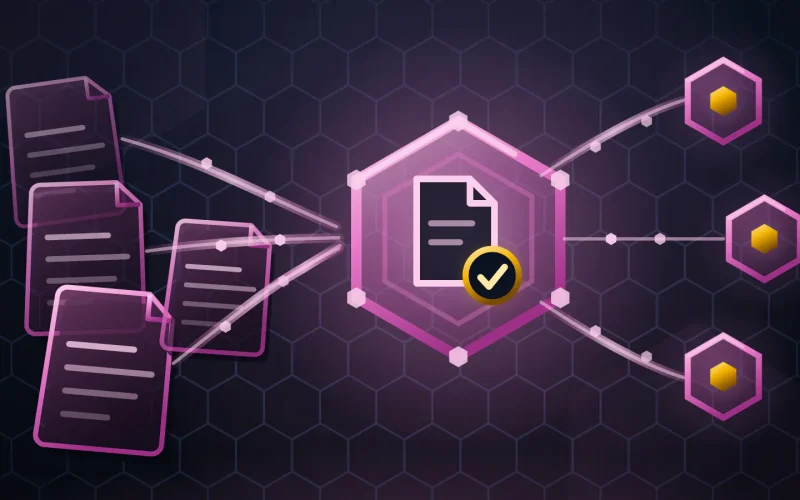
An AI invoice matching agent that reads every supplier invoice, matches it line by line against the purchase order and the goods receipt, and leaves only the ones outside tolerance for a person, with the reason already attached.
What an AI invoice matching agent does
An AI invoice matching agent is a scoped autonomous worker that performs the three-way match: invoice against purchase order against goods receipt. Matched lines move on. Variances stop, with their evidence.
Accounts payable is precise work made slow by format. The same information arrives as a PDF, a scanned page, an email body and a portal export, and a person retypes it into the ledger before any checking can start. The checking itself takes seconds. The retyping takes the afternoon.
The agent reads the document, extracts the lines, finds the matching order and receipt, and applies your tolerance. Where quantity, price and receipt agree within your rules, it posts for payment under your approval matrix. Where they do not, it stops and says which of the three disagrees.
Inputs -> Outputs
| It reads | It produces |
|---|---|
| Supplier invoices as PDFs, scans, emails and portal files | Structured lines with quantity, price, tax and currency |
| Purchase orders and their approved lines | A line-level match, or a named variance with its size |
| Goods receipts and delivery confirmations | Confirmation that what is billed was actually received |
| Your tolerance and approval matrix | A posting for payment where every line is inside tolerance |
| Supplier master data and payment terms | A duplicate-invoice check and an early-payment discount flag |
| Contract rates and agreed price lists | A flag when an invoice is billed above the contracted rate |
Where it runs
- ERP and accounting systems
- Accounts payable and invoice capture tools
- Procurement and purchase-order systems
- Document and email stores
- Banking and payment platforms
- Chat, for approval queues
Platform names are shown as illustrative examples of a category, never a claim of a delivered integration.
A day in its life
| Time | What it does |
|---|---|
| 22:00 | The overnight run picks up 340 invoices from the shared mailbox and the supplier portal. |
| 22:18 | It extracts 2,900 lines and finds a matching order and receipt for 318 of the invoices. |
| 22:40 | 311 sit inside tolerance and are posted for payment under your existing approval matrix. |
| 22:44 | Seven carry a real variance. One is billed above the contracted rate on a single line. |
| 22:47 | Twenty-two have no receipt yet. It holds them and asks the requester to confirm delivery. |
| 08:30 | Accounts payable opens seven exceptions with the variance already named, not 340 documents. |
Guardrails and human-in-the-loop
Autonomy boundary
It may extract, match, apply tolerance, post inside your approval matrix and flag duplicates. It may not pay, change supplier bank details, alter a purchase order or approve outside tolerance.
Approval gates
Every payment follows your existing approval matrix unchanged. An agent proposing a posting does not shortcut a single signature.
What stays human
Supplier disputes, contract interpretation, credit notes, anything touching bank details, and every judgment about a relationship.
Escalation
Variance beyond tolerance, a missing receipt, a suspected duplicate, a new supplier, or a bank detail that differs from the master record. That last one stops unconditionally.
Logging
Every match records the source document, the extracted values, the rule applied and the result. The log is built to be handed to an auditor as it stands.
The human role it augments
This agent does not replace your accounts payable team. It removes the keying and the hunting - the retyping, the chasing a receipt through three inboxes, the reconciling of a statement nobody has time for - so the team works on the exceptions, the suppliers and the controls, which is the part with money attached.
It also changes what gets caught. Duplicate invoices and above-contract rates are found by attention, and attention runs out on volume. A check applied identically to every line finds the ones that slip through on a busy month.
Time to value and cost shape
- Cost shape - Priced per invoice processed, not per finance seat. The comparison is a model call and an extraction against the loaded minutes per invoice today, plus late-payment charges and missed early settlement discounts.
- Model your own figures - ROI calculator · what a hive costs
KPIs it moves
- Touchless rate
- Invoices matched and posted with no human keying, before and after (Yours)
- Cycle time
- Days from invoice receipt to approved for payment (Yours)
- Exceptions caught
- Duplicates and above-contract lines found, counted monthly (Yours)
- 100%
- Of postings carrying a source document and an applied-rule trail (Target)
Provenance is shown on every cell. Nothing here is a client outcome.
Frequently asked questions
Can it pay an invoice by itself?
No. It matches, checks and posts for payment inside the approval matrix you already run. The payment run stays where it is, with the same signatures. Separating "this invoice is correct" from "this money leaves" is the control that makes the rest of it safe to automate.
What happens with a supplier who invoices in a strange format?
It handles the common ones out of the box and learns the awkward ones from corrected examples, which is normal work in the first weeks rather than a failure. Where a format defeats it, the invoice goes to a person and is counted, so a supplier worth a conversation becomes visible.
How does an AI invoice matching agent handle partial deliveries?
As a hold rather than a variance. A part-received order is matched on the lines actually received, and the remainder waits for the next goods receipt instead of blocking the invoice. Where your policy is to pay only on full receipt, it follows that instead. Your rules, applied every time.
Is it safe against invoice fraud?
It reduces one class and does not remove the risk. Duplicate references, bank details differing from the master record, new suppliers and above-contract rates all stop unconditionally rather than being judged. Payment authority stays human, because the strongest control against invoice fraud is a person who has to approve the money.
Related agents
Compliance Watch Agent
Tests that these controls ran, and keeps the evidence an auditor asks for.
Onboarding Agent
Applies the same approval-matrix discipline to access instead of money.
Ticket Triage Agent
Routes the billing queries these exceptions generate.
Knowledge-Base Agent
Documents the supplier and billing questions that keep recurring.
Order & Logistics Agent
Watches the physical side of the same purchase orders and receipts.
Incident Response Agent
A different department, same habit: gather the evidence first, then escalate with it attached.