
Sales
An AI proposal generator agent that assembles a scoped, priced first draft from your own approved library within the hour, and stops at any discount your policy does not already allow.
What an AI proposal generator agent does
An AI proposal generator agent is a scoped autonomous worker that turns a qualified opportunity into a drafted proposal, built only from approved language and your live rate card. A person signs it off.
Proposals are slow for a reason that has nothing to do with writing. The last one has to be found, the wrong client’s name has to be hunted out of it, the pricing has to be rebuilt, and legal has to confirm that the clause somebody edited in March is still the clause. Three days pass. The buyer’s momentum passes with them.
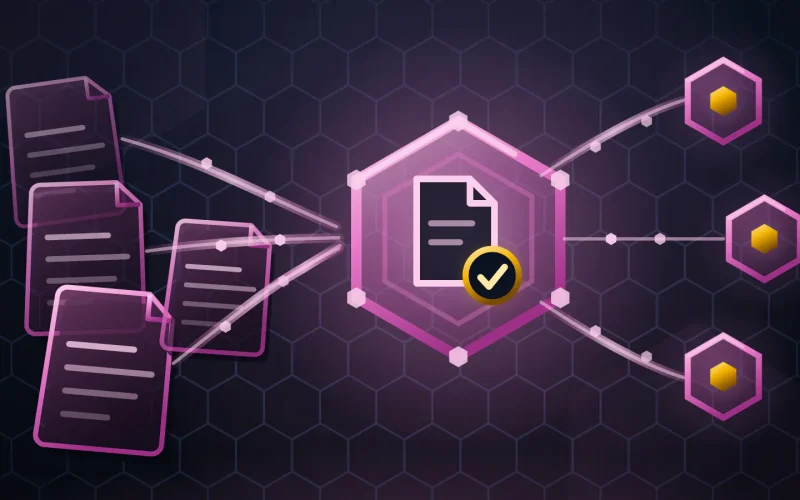
This agent assembles rather than invents. Scope comes from the notes, sections come from your library, pricing comes from the rate card, and anything outside policy stops for approval instead of appearing in a document a client has already read.
Inputs -> Outputs
| It reads | It produces |
|---|---|
| The opportunity record, notes and call summaries | A scope section written from what the buyer actually said |
| Your approved content library and past proposals | Sections assembled from language that has already been cleared |
| The current rate card and packaging rules | A priced quote, with the assumptions behind each line shown |
| Discount and approval policy | A stop, and a request to a named approver, when a discount exceeds policy |
| Legal clause library and current terms | The current clause, never the version in last quarter’s document |
| Your proposal template and brand rules | A formatted draft in your template, ready for a human pass |
Where it runs
- CRM and opportunity records
- Document editors and file stores
- Quoting and pricing tools
- Contract and e-signature systems
- Approval workflows in chat
- Content and clause libraries
Platform names are shown as illustrative examples of a category, never a claim of a delivered integration.
A day in its life
| Time | What it does |
|---|---|
| 14:30 | A rep marks an opportunity ready to propose. The agent picks it up on the event. |
| 14:32 | It reads the call notes and drafts the scope from the buyer’s own words, not the template’s. |
| 14:36 | It builds the price from the rate card, showing the assumption behind every line. |
| 14:38 | The requested discount is above policy. It stops the price section and asks the approver. |
| 14:39 | It assembles the rest: approach, timeline, terms, all from the approved library. |
| 15:10 | The approver clears the discount. The rep gets a complete draft to edit, same afternoon. |
Guardrails and human-in-the-loop
Autonomy boundary
It may assemble, price inside policy, and format. It may not send a proposal, approve a discount, change the rate card or alter a legal clause.
Approval gates
Discounts outside policy, non-standard terms and any commitment on a date go to the named owner of that decision before the section is finished.
What stays human
The commercial judgment. What to include, what to leave out, what the relationship can carry, and whether to walk away.
Escalation
A scope it cannot construct from the record, a product combination with no priced precedent, or a clause the library does not cover. It says which, and stops.
Logging
Every draft records the library versions, the rate-card version and the approvals it collected, so a proposal can be reconstructed months later.
The human role it augments
This agent does not replace your account executives or your proposals team. It removes the assembly - the copy-paste, the stale clause hunt, the rebuilt pricing table - so the human hours go into the argument, which is the only part of a proposal a buyer remembers.
It also closes a gap that is rarely admitted. Proposal quality currently tracks how busy the rep was that week rather than how important the deal is. Assembly is where that variance comes from, and it is the part a machine does the same way every time.
Time to value and cost shape
- Cost shape - Priced per proposal drafted, not per sales seat. The comparison is the hours a rep and a proposals team spend per document, against deals that stall while the draft sits in a queue.
- Model your own figures - ROI calculator · what a hive costs
KPIs it moves
- Time to first draft
- Hours from "ready to propose" to a document a rep can edit (Yours)
- Pricing errors
- Quotes leaving with a stale rate or a policy breach, counted (Target)
- Clause currency
- Proposals carrying the current approved terms (Target)
- 100%
- Of out-of-policy discounts routed to a named approver (Target)
Provenance is shown on every cell. Nothing here is a client outcome.
Frequently asked questions
Could it send a proposal to a client by mistake?
It has no send rights. It produces a draft in your template and notifies the owner. Delivery, whether by email or through a signature system, stays a human action. This is the one boundary we recommend against moving, because a proposal is a commercial commitment rather than a message.
What stops it from inventing capabilities we do not have?
It assembles from your approved library instead of writing from the model's general knowledge. Where the opportunity needs a claim the library does not contain, it flags the gap for a person rather than composing something reasonable-sounding. A proposal is the worst possible place for a plausible sentence.
Our pricing is complicated. Will an AI proposal generator agent get it right?
It applies your rules rather than reasoning about price, and shows the assumption behind every line so an error is visible before a client sees it. Where a combination has no priced precedent, it stops. Complexity is handled by encoding the rules, not by trusting the model to infer them.
How does it keep legal terms current?
It reads the clause library at draft time, records which version it used, and never copies terms out of an earlier document. That last part removes the most common failure in proposal writing: last quarter's liability cap quietly living on in this quarter's contract.
Related agents
CRM Hygiene Agent
Keeps the opportunity data this draft is built from accurate.
Pipeline Forecast Agent
Tracks what happens to every proposal after it goes out.
Lead Research & Enrichment Agent
Starts the record at the top of the same funnel.
Outbound Personalization Agent
Opens the conversation this document closes.
Meeting Prep Agent
Briefs the call where the scope gets agreed.
Invoice Matching Agent
A different department, same discipline: match the document against the policy, escalate the variance.