
Sales
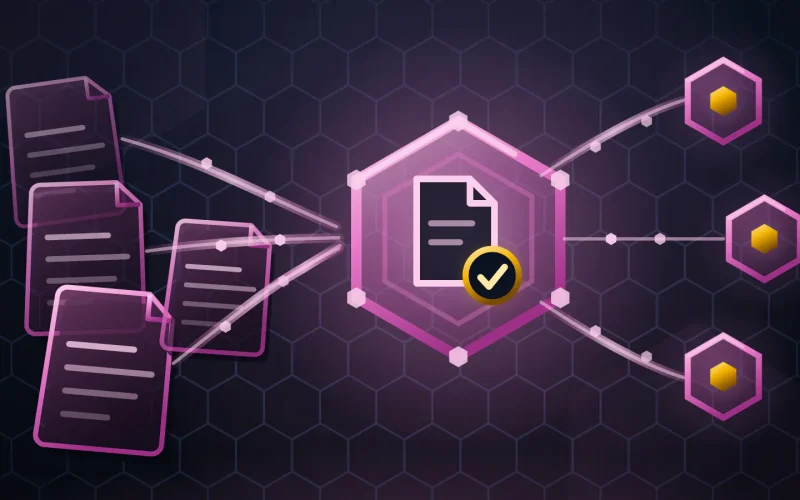
An AI lead enrichment agent that researches every inbound lead the minute it lands, fills the fields a rep would otherwise fill by hand, and routes it with a fit score and its reasons attached.
What an AI lead enrichment agent does
An AI lead enrichment agent is a scoped autonomous worker that turns a thin inbound form into a researched, routed record. It runs once per lead. It never sends the first email.
A form gives you a name, an email and a company. Everything a rep needs before deciding to call sits somewhere else: headcount, region, stack, funding, and whether you are already talking to this account. So the research happens late, or badly, or the lead cools while it waits behind yesterday’s.
This agent does that lookup in the minutes after submission, from sources you have approved, and writes what it finds with each field’s origin attached. Where two records look like the same company, it stops. Merging is not its call.
Inputs -> Outputs
| It reads | It produces |
|---|---|
| Inbound form submissions and their raw fields | A completed record, every written field tagged with its source |
| Firmographic and technographic data sources | Industry, headcount, region and stack, where they can be confirmed |
| Your existing accounts and contacts | A duplicate flag when the company is already in the system |
| Your ideal-customer definition | A fit score with its reasons listed, not a bare number |
| Territory and routing rules | An owner assigned by your rules rather than by who claims fastest |
| Public company sources you have approved | A short “why now” note: funding, hiring, a launch, a new leader |
Where it runs
- CRM and contact records
- Marketing automation and web forms
- Firmographic and technographic data providers
- Business registries and public filings
- Chat, for routing notices
- Spreadsheets and imported lists
Platform names are shown as illustrative examples of a category, never a claim of a delivered integration.
A day in its life
| Time | What it does |
|---|---|
| 09:14 | A demo request arrives. A work email, a company name, nothing else. |
| 09:14 | The agent claims it and starts the lookup before the confirmation email has sent. |
| 09:16 | It confirms the company against a registry, then fills industry, headcount, region and stack. |
| 09:17 | It finds a second record: same company, different spelling, owned by another rep. |
| 09:18 | It does not merge. It flags the pair and routes the lead to the existing owner. |
| 09:19 | The rep opens a record that is already complete, with the “why now” note on top. |
Guardrails and human-in-the-loop
Autonomy boundary
It may research, write into empty fields, score fit and route. It may not merge records, overwrite a value a person typed, or contact a lead.
Approval gates
Merges, ownership changes on a live opportunity, and any change to the fit model go to a named person.
What stays human
The decision to pursue, the account plan, and the judgment about whether a high-scoring lead is worth a week of anyone’s time.
Escalation
Suspected duplicates, conflicting sources it cannot reconcile, and companies it cannot confirm exist. Each stops with its evidence attached.
Logging
Every field records its source, its timestamp and the value it replaced, so any enrichment can be reversed later.
The human role it augments
This agent does not replace your sales development reps or your revenue operations lead. It removes the lookup - the tab-switching, the copy-paste, the checking whether this account is already somewhere in the CRM - so the first human minute spent on a lead goes into deciding rather than typing.
It also removes a quiet unfairness. A lead arriving late on a Friday is currently researched worse than the same lead arriving on a Tuesday morning. The agent does not know what day it is.
Time to value and cost shape
- Cost shape - Priced per lead enriched, not per sales seat. The comparison is a handful of source lookups and a model call against the minutes a rep spends on the same record, multiplied by every lead that arrives.
- Model your own figures - ROI calculator · what a hive costs
KPIs it moves
- Time to first touch
- Minutes from submission to a rep opening a complete record (Yours)
- Field completeness
- Share of required fields populated at handover, before and after (Yours)
- Duplicate rate
- New records created for companies you already had, counted not absorbed (Target)
- 100%
- Of written fields carrying a source and a reversible history (Target)
Provenance is shown on every cell. Nothing here is a client outcome.
Frequently asked questions
Where does the data come from, and may we use it that way?
From sources you have approved and hold a license for, plus public filings and registries. The agent does not scrape whatever it can reach, and every field it writes names its origin, so a data-protection question about one record can be answered from the record itself. Sources you exclude are excluded everywhere.
Will it overwrite what our reps have already typed?
No. A human-entered value is treated as authoritative and is never replaced. The agent fills empty fields and proposes corrections to values it did not write, which a person accepts or rejects. That rule is the reason reps keep trusting the record after month three.
How is an AI lead enrichment agent different from the data provider we already pay for?
A provider returns fields. This agent decides which fields matter for your definition of a good account, reconciles two providers that disagree, checks the lead against your existing base, applies your routing rules and explains the score it gives. The lookup is the cheap part. The judgment around it is the work.
What happens when it finds nothing?
It says so, in the record, rather than filling the gap with a plausible guess. A lead marked "unconfirmed company" is more useful than one carrying an invented headcount, because a rep can act on the first and will be misled by the second. Unresolvable lookups are counted weekly, which is usually how a bad source gets found.
Related agents
Outbound Personalization Agent
Writes the first touch using the research this agent has already done.
Meeting Prep Agent
Briefs the call once the lead accepts one.
Proposal Drafting Agent
Assembles the document at the other end of that conversation.
CRM Hygiene Agent
Keeps the base clean so this agent’s duplicate check has something honest to check against.
Pipeline Forecast Agent
Reads the records both agents maintain and scores what is genuinely open.
Ticket Triage Agent
A different department, same pattern: read, classify, route, escalate the ambiguous one.