
Engineering
A self-healing infrastructure agent that detects degradation, applies a remediation you have already approved, verifies the symptom actually cleared, and stops the moment it leaves familiar ground.
What a self-healing infrastructure agent does
A self-healing infrastructure agent is a scoped autonomous worker that watches your systems and applies known fixes to known failures, within a blast radius you define in advance.
It is not reasoning its way to novel infrastructure changes at three in the morning. It is executing the runbook your team already trusts, faster and more consistently than a woken human, and it stops the moment the failure does not match anything in that runbook. The remediation set is finite, agreed up front and reversible, and that is what makes acting safe rather than reckless.
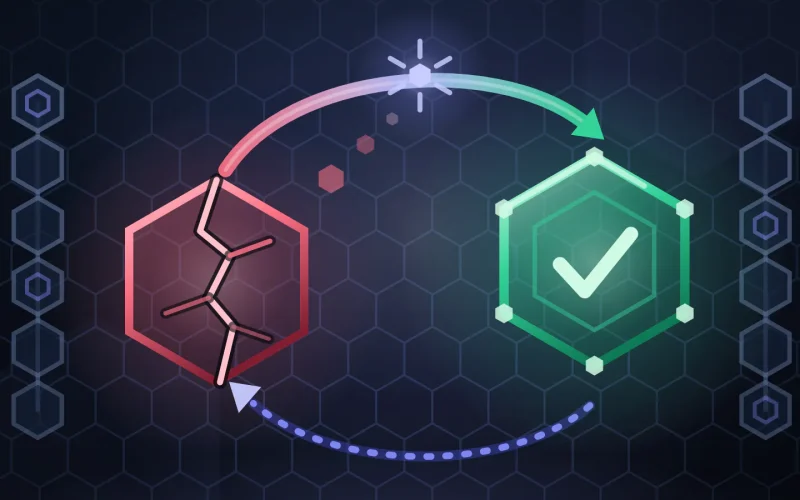
The verification step is what separates this from a cron job with opinions. A restart that exits zero while the service still fails its health check is not a recovery, and treating it as one is how automated remediation earns a bad reputation.
Inputs -> Outputs
| It reads | It produces |
|---|---|
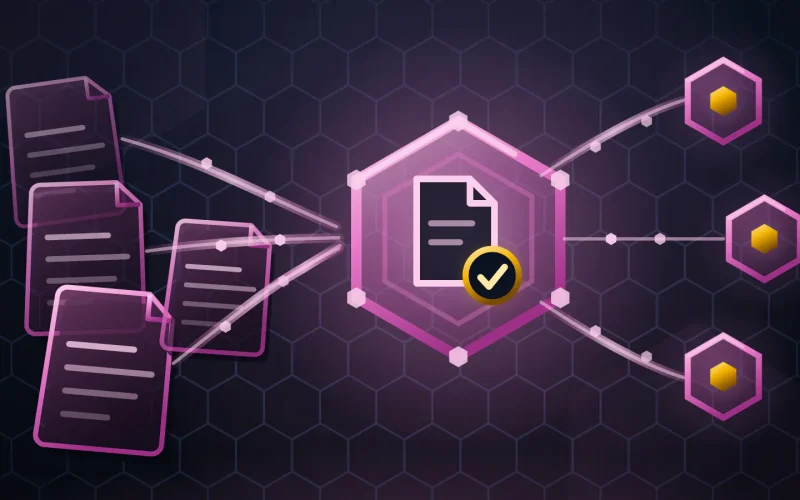
| Health checks and synthetic probes | A matched remediation from the approved set |
| Resource metrics and saturation signals | A scaling or restart action inside its blast radius |
| Logs and traces at the point of failure | A verification result against the original symptom |
| Deploy history and recent changes | A rollback where the change is the probable cause |
| The approved remediation playbook | An escalation when nothing matches |
| Past remediation outcomes | A recurrence report naming what keeps breaking |
Where it runs
- Cloud platforms and container orchestration
- Observability and monitoring
- Logging and tracing
- Alerting and on-call
- CI/CD, for rollbacks
- Configuration and secrets management
- Chat, for escalation
Platform names are shown as illustrative examples of a category, never a claim of a delivered integration.
A day in its life
| Time | What it does |
|---|---|
| 04:47 | Latency on a service crosses its threshold. The agent claims the signal. |
| 04:47 | It checks saturation, recent deploys and dependency health before touching anything. |
| 04:48 | Cause: a memory leak pattern seen before. The approved response is a rolling restart. |
| 04:49 | It restarts one instance, not the fleet. Blast radius is one at a time by policy. |
| 04:52 | Latency recovers on that instance. It proceeds through the remaining instances in sequence. |
| 05:06 | Verified healthy. It logs the event, increments the recurrence count and stands down without paging. |
Guardrails and human-in-the-loop
Autonomy boundary
A finite, pre-approved set of remediations, each with a blast radius: how many instances, which environments, how many attempts before it stops. Nothing outside the set, ever.
Approval gates
Anything destructive, anything touching data or storage, anything in a protected environment, and any action outside the approved set waits for a person.
What stays human
Novel failures, capacity decisions, judgment about customer impact, and expanding the remediation set itself.
Escalation
Two failed attempts stops the agent and pages a human with everything it observed and tried. It never escalates its own attempts.
Logging
Every observation, inference, action and verification is timestamped and reversible, which is both the audit trail and the incident timeline.
The human role it augments
This agent does not replace your SRE or platform engineer. It removes the recurring, runbook-shaped interruptions - the restart, the cache clear, the scale-up at 4 a.m. - so their week goes to the work that removes those failures permanently rather than to performing the same remediation for the ninth time.
The recurrence report is deliberately uncomfortable. An agent that quietly patches the same fault forever is hiding a problem behind good availability numbers, so this one counts every fix by class and puts the total in front of the person who can eliminate it.
Time to value and cost shape
- Cost shape - Priced per remediation event rather than per engineer seat. The comparison is out-of-hours responder time plus the customer-visible cost of degradation that persists until a human is available.
- Model your own figures - ROI calculator · what a hive costs
KPIs it moves
- Out-of-hours pages
- Pages for runbook-shaped failures, before and after (Yours)
- Time to recovery
- Symptom detected to symptom cleared (Yours)
- Verified recoveries
- Share confirmed against the original symptom, not the exit code (Target)
- Bounded
- Every action carries a blast radius and an attempt ceiling (Target)
Provenance is shown on every cell. Nothing here is a client outcome.
Frequently asked questions
Are you really letting an AI change production unattended?
Within a finite set of remediations your team approved in advance, each bounded by blast radius and attempt ceiling, yes. It is not improvising. It is running your runbook. Anything unfamiliar or destructive stops and pages a human instead, and every action is logged and reversible.
What if a remediation makes things worse?
Actions are reversible and bounded, verification runs against the original symptom, and two failures stop the agent rather than escalating its attempts. It also acts on one instance before proceeding, so a bad remediation affects one instance rather than a fleet. Diagnosis-only mode first means you see its judgment before it has any.
How does it know what "recovered" means?
It is defined per remediation against the original symptom, not the command's exit status. If latency triggered the action, latency has to come back within bounds before the agent stands down. This is the distinction most auto-remediation tooling gets wrong.
Do we need clean runbooks before we start?
No. The pilot works from your incident history to find the recurring classes, and the approved set is built from what your team already does in practice. For many teams this is the first time those responses have been written down, which is a benefit worth having even before any automation.
Related agents
Dependency & Patch Agent
Removes a recurring cause before it becomes an incident.
Build & Release Agent
Rolls back the release this agent identifies as the cause.
Code Review Agent
Catches some of these faults before they ship.
Test-Writing Agent
Turns each recurrence into a regression test.
Incident Response Agent
Handles the incidents this agent escalates.
Email Campaign Agent
A different department, same pattern: bounded autonomy, human gate.